

Crate digging is the hands-on search through records for something you want to hear.
You might follow a label, a producer or an interesting B-side, then come across a release you did not know to look for.
A shopping list can still come with you. The point is leaving room for discovery.
If you are heading to your first record shop, a few useful leads can make the shelves less daunting.
Know what to check before buying, set your budget and leave time to browse beyond the titles you came for.
What Makes Digging Different from Shopping with a List?
Shopping with a list means you know the title before you walk in.
Digging starts with a looser idea, a mood, a label you trust, a producer whose name keeps turning up, and lets the record shop fill in the rest.
Follow Labels, Producers and B-Sides
Record labels often have a sound. If you like one release on a label, others from the same catalogue are worth a flick through.
The same goes for producers and engineers, whose names sit quietly on the sleeve or label even when the artist up front means nothing to you.
B-sides reward curiosity too. If you only know the familiar A-side, turning a single over gives you another tune to investigate.
It might be the side you end up playing most.
Choose Records You'll Want to Play
Buying something because you'll actually put it on is a better habit than buying on a hunch that it might be worth something one day.
A record you play ten times is worth more to you than one that sits in a sleeve waiting to be valuable.
Digging works best when every record earns its place in your bag, not when you're trying to guess what a record might fetch later.
Where Can You Start Digging?
The easiest way in is to visit a few different types of places and see which one suits how you like to shop.
Record shops, charity shops and fairs each offer a different pace and a different kind of find.
Try Record Shops
Record shops are the obvious starting point, and most organise stock by genre, letter or price, which gives you a system to work through.
Staff usually know their shelves well, so a quick question about a label or scene can point you somewhere useful.
Charity Shops and Fairs
Charity shops may have a small, mixed selection rather than specialist sections, so allow time to work through what is there.
Record fairs bring different sellers together, giving you several boxes and approaches to browse in one visit.
Set a Budget Before You Browse
Deciding on a limit before you start stops a good afternoon from turning into an expensive one.
A simple cap per visit, or per record, keeps the focus on finding things you'll enjoy rather than filling a bag because everything feels like a bargain.
How Do You Check a Record Before Buying?
A record can look fine on the outside and still play badly, so checking properly means looking closely and asking questions, not just glancing at the cover.
A bit of care here saves you from getting home to a disappointing crackle.
Inspect the Record and Understand Condition Grades
Hold the record up to the light and check the surface for scratches, scuffs and dust build-up, then look at the sleeve for tears or damp marks.
Record shops and online marketplaces often grade condition using set terms, and Discogs sets out how condition grading works, covering everything from Mint down to Poor.
Knowing these terms helps you understand a seller's description. Ask whether the grade comes from a visual check or a playback check: looking clean does not guarantee quiet playback.
Ask About Playback and Handle Records with Care
Ask whether there's a turntable you can use before you buy, rather than assuming every shop offers one.
Some do, some don't, and it's a fair question to ask rather than guess.
When you handle a record, keep your fingers on the edges and label area rather than across the grooves.
Make Room for the Unexpected Find
Some of your favourite records may be ones you did not plan to buy.
Going in with a loose idea rather than a rigid list leaves space for a label you've never heard of or a cover that just looks interesting to pull you in.
Exploring online databases works the same way in miniature.
Discogs explains how to browse and search its database, which is a useful way to research a label or producer before your next shop visit, so you've got a few leads ready when you walk in.
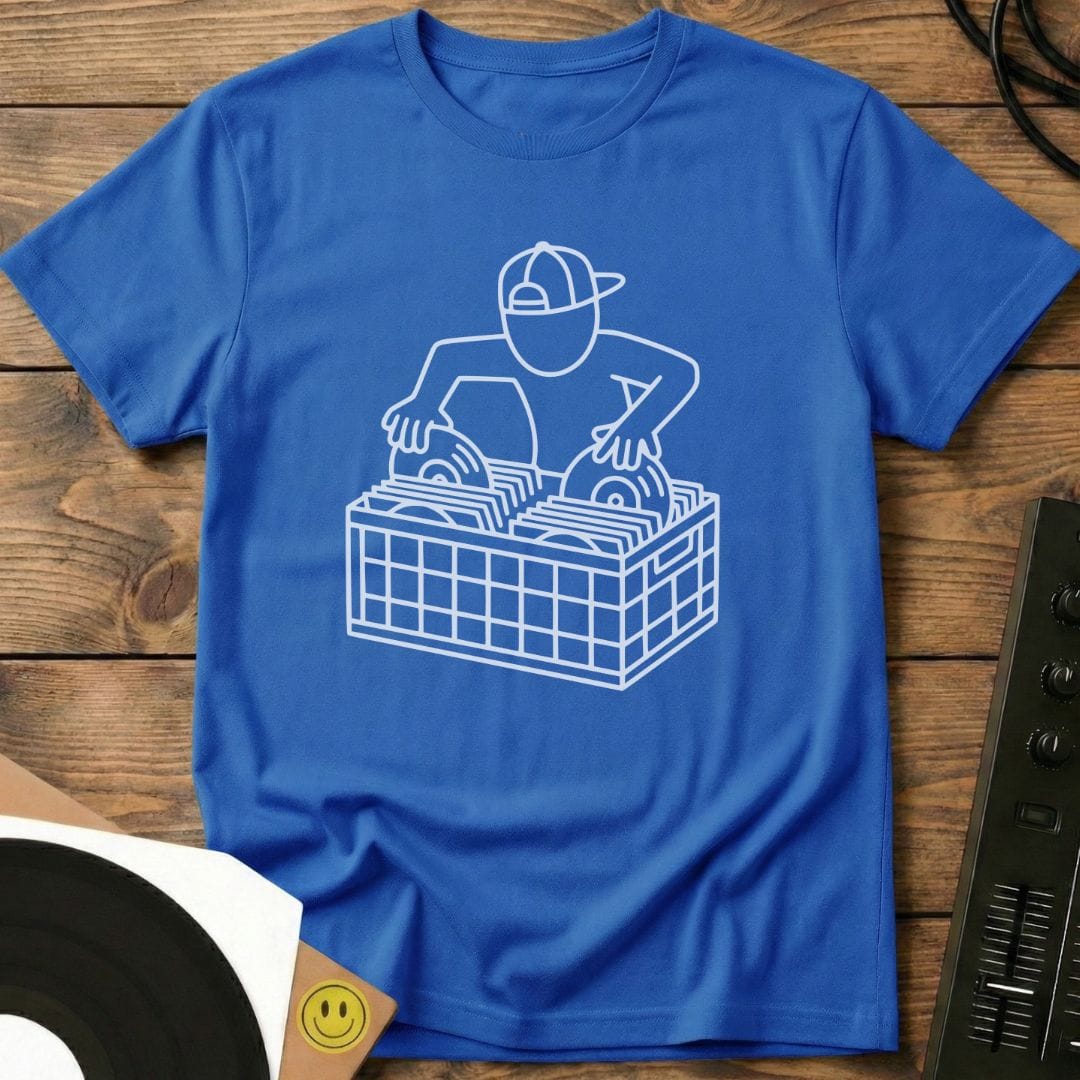
If you want a small nod to the habit itself, the Deep Dig T-shirt is built around exactly this kind of search.
It sits alongside the rest of the vinyl t-shirt collection at Dad's Old Vinyl.
0 comments